Hard Water Window Stains in Long Beach: Why Coastal Homes Suffer More & How We Fix It
Hard water stains on residential and commercial windows are one of the most misunderstood maintenance problems in Southern California — and Long Beach properties suffer the worst of it. The city’s proximity to the ocean, its mineral-heavy municipal water supply, and the prevalence of poorly aimed irrigation systems combine to etch calcium and magnesium deposits into glass far faster than in nearly any other market in the region. Understanding exactly why staining is so aggressive here, what separates reversible discoloration from permanent glass damage, and what a professional restoration process actually involves helps Long Beach property owners make better decisions before a cloudy window becomes an expensive replacement.
Also on the Skyworks blog: Coastal properties don’t just face hard water — salt air creates its own set of facade maintenance demands. Read Why SPRAT & IRATA Certification Matters for Your High-Rise Window Cleaning to understand how at-height restoration work on Long Beach towers is safely managed.
01 Why Long Beach Windows Stain Faster Than Anywhere Else in SoCal
Hard water staining is a chemistry problem, not a cleanliness problem. When water containing dissolved calcium carbonate, magnesium, and other mineral ions evaporates on glass, it leaves behind a residue. In dry, inland climates, this process happens slowly and the deposits remain relatively easy to clean for weeks after they form. Long Beach changes that equation in three simultaneous ways.
First, the city draws from water sources with notably high mineral content. Second, marine air delivers a continuous background layer of microscopic salt particles that settle on every outdoor glass surface and create an ionic environment that accelerates the bonding of calcium deposits to the silica in glass. Third, the intense Southern California sun — particularly acute on south- and west-facing elevations in Long Beach — acts as a kiln, baking minerals into glass faster than they would cure in a shadier or less arid environment.
The result is that a Long Beach window left untreated after irrigation overspray or a salt-air event can develop genuinely difficult-to-remove staining in as little as four to six weeks — a timeline that catches many homeowners off guard when they realize standard cleaning products are no longer effective.
02 The 4 Stages of Hard Water Staining — And What Each One Requires
Not all hard water stains are the same, and the treatment method depends entirely on which stage the glass has reached. Misidentifying the stage is the most common reason DIY removal attempts fail — and the most common reason property owners damage glass trying to remove stains with products that were never designed for glass surfaces.
Surface Film — Freshly Deposited Minerals
White or milky haze that wipes away partially with a damp cloth but leaves residue. The mineral layer has not yet bonded to the glass surface. Stage 1 staining responds to mild acidic cleaning agents — white vinegar works here — applied promptly. This is the only stage where DIY removal is reliably effective without risk of glass damage.
Bonded Deposits — Chemically Adhered Calcium Layer
Haze that does not shift with standard glass cleaners and has a rough, tactile quality when run across with a fingernail. Calcium carbonate has completed an ionic bond with the silica in the glass surface. Stage 2 requires professional-grade acidic cleaners — specifically phosphoric or hydrofluoric acid blends — applied with mechanical agitation. Attempting to scrub Stage 2 staining with abrasive pads typically spreads the damage.
Surface Etching — Mineral Penetration of the Glass
Visible pitting, crazing, or permanent clouding that does not clear even with professional acid cleaning. The mineral deposit has been drawn into the silica matrix of the glass itself, altering the surface at a microscopic level. Stage 3 requires cerium oxide polishing — a glass restoration compound applied with a rotary polisher that gently removes the damaged surface layer. Results are excellent when performed correctly, but timing matters: Stage 3 caught early restores to near-clarity; Stage 3 that has progressed to deep etching may require glass replacement.
Deep Structural Damage — Replacement Threshold
Glass that has been repeatedly exposed to mineral saturation, salt, and UV without treatment, producing crazing or delamination visible from inside the structure. No cleaning or polishing protocol restores structural glass damage. A reputable contractor will identify Stage 4 during the site survey and recommend replacement rather than proceed with restoration that cannot achieve results.
Related reading: Facade inspection during cleaning visits catches Stage 3 staining before it reaches Stage 4. Read How Drone Technology Improves Exterior Building Cleaning to see how aerial surveys identify glass damage on elevations that are difficult to inspect from the ground.
03 The 6-Step Professional Hard Water Removal Process
Here is exactly how a professional hard water stain removal project moves from initial assessment to final polish on a Long Beach residential or commercial property.
Site Assessment & Stain Staging
A technician inspects every affected window, identifies the staining stage on each pane, and documents glass type — since some specialty glass coatings and low-E films require modified treatment protocols that differ from standard float glass. This assessment is the basis for an accurate quote and prevents the wrong product from being applied to the wrong surface.
Pre-Rinse & Contamination Removal
Before any chemical is applied, the glass surface is rinsed with purified water to remove loose particulate, salt residue, and dust. Skipping this step embeds surface contamination under the treatment solution, reducing effectiveness and risking micro-scratching.
Acid Treatment Application
Stage 2 and moderate Stage 3 staining is treated with a professional-grade phosphoric acid solution applied with a controlled applicator — not a spray — to prevent runoff onto frames, seals, and surrounding surfaces. Dwell time is monitored by the technician based on stain severity. This is not a product available over the counter, and concentration levels that are effective on bonded calcium deposits require professional handling to avoid damage to adjacent materials.
Mechanical Agitation & Residue Lift
The treated area is worked with a professional-grade glass scrubber or non-abrasive pad to lift the loosened mineral deposit from the surface. The sequence — chemical first, agitation second — is critical. Reversing it does not produce the same result and risks embedding residue deeper into the glass.
Cerium Oxide Polishing (Stage 3 Only)
Where etching has penetrated the glass surface, cerium oxide polishing compound is applied with a rotary polisher at controlled speed and pressure, removing the top micron of damaged silica to restore optical clarity. This step requires significant skill to avoid creating polishing marks or uneven optical distortion — which is why Stage 3 restoration is a specialist service, not an add-on to standard cleaning.
Final Rinse, Squeegee & Inspection
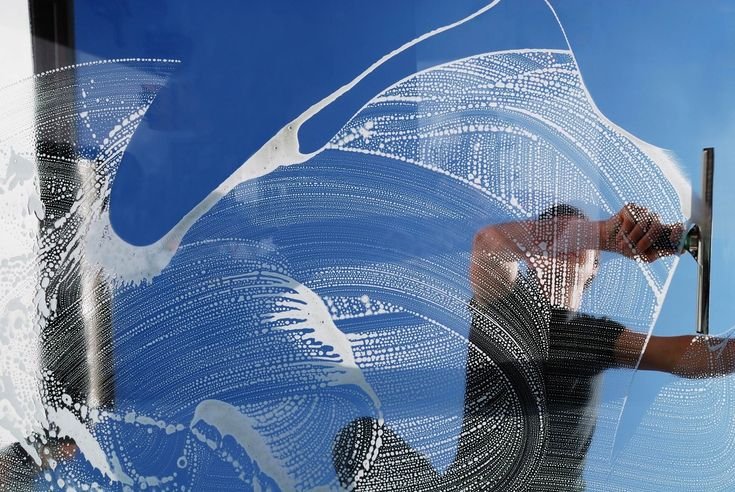
The glass is rinsed thoroughly with purified water, finished with a professional squeegee, and inspected under oblique light to confirm complete stain removal and absence of polishing artifacts. The technician documents results with photographs and delivers a written report noting any windows that may warrant monitoring at the next visit.
04 Hard Water Removal vs. Standard Window Cleaning vs. Glass Polishing
Here is how the three approaches compare for Long Beach coastal properties dealing with mineral staining:
| Service | Best For | Removes Hard Water Staining | Typical Limitation |
|---|---|---|---|
| Standard Window Cleaning | Regular maintenance, Stage 1 prevention | Stage 1 only | Cannot remove chemically bonded calcium deposits |
| Professional Acid Treatment | Stage 2 & early Stage 3 bonded deposits | Stage 2 & mild Stage 3 | Requires trained handling; not effective on deep glass etching |
| Cerium Oxide Glass Polishing | Stage 3 etched glass restoration | Stage 3 (deep etching) | Specialist process; cannot reverse Stage 4 structural damage |
| Glass Replacement | Stage 4 structurally damaged glass | All stages (new glass) | Higher cost; only appropriate when restoration cannot achieve results |
05 What You Should See on a Professional Restoration Visit
If a technician is at your Long Beach property to remove hard water staining, here is what a properly run, professional session looks like from the property owner’s perspective.
06 Skyworks Unlimited’s Hard Water Restoration Standards
Every step above describes how a professional contractor should operate — and it describes exactly how Skyworks Unlimited runs every hard water removal project in Long Beach, Signal Hill, Seal Beach, and across the greater Southern California coast.
Stage-by-Stage Glass Assessment Before Every Project
We stage every window before recommending a treatment protocol — never applying acid treatment to glass that only needs standard cleaning, and never attempting standard cleaning on glass that requires polishing. The right process for the right stage, documented before the work begins.
Professional-Grade Treatment Products — Not Consumer Substitutes
Our technicians use commercial phosphoric acid solutions at controlled concentrations that are not available through retail channels, paired with proper dwell time monitoring and mechanical agitation sequences that produce results consumer-grade products cannot match on Stage 2 and Stage 3 deposits.
$1M+ General Liability — Your Property as Additional Insured
Every Skyworks Unlimited project is backed by $1 million or more in commercial general liability coverage, with the property named as additional insured as standard practice — relevant for hard water restoration because acid-based treatments require correct handling to avoid frame or seal damage.
Before-and-After Photo Report at Project Close
Every project closes with a photo-documented report showing glass condition before treatment, results after, and any windows identified as approaching Stage 3 or Stage 4 that warrant monitoring or replacement consideration at the next visit.
Related service: Hard water removal is most effective when paired with an ongoing maintenance schedule. Explore our facade inspection services and commercial caulking to protect restored glass from the seal failures that allow water infiltration to restart the staining cycle.
07 How Often Should Long Beach Properties Schedule Cleaning to Prevent Hard Water Staining?
Long Beach’s coastal chemistry makes prevention far more cost-effective than restoration. Here is the professional cleaning cadence by property type, calibrated specifically for the coastal Southern California environment:
Oceanfront & Canal-Adjacent Residential Properties
Properties within a half mile of the ocean — Naples Island, Belmont Shore, Bluff Park — face continuous marine aerosol exposure that deposits salt and minerals on glass surfaces even without direct water contact. Monthly professional cleaning is the correct maintenance interval to prevent Stage 1 deposits from progressing to Stage 2 bonding between visits.
Properties with Irrigation Systems Adjacent to Glass
Irrigation overspray is the single most aggressive driver of hard water staining across Long Beach residential neighborhoods. Sprinkler heads directing mist or overspray onto glass surfaces can Stage-1 stain a window in a single irrigation cycle and Stage-2 bond it within a month. A four-to-six-week cleaning cadence is the minimum to stay ahead of bonded deposits on irrigated properties.
Inland Long Beach Residential & Light Commercial
Properties in inland Long Beach neighborhoods further from the marine layer — Bixby Knolls, Wrigley, North Long Beach — experience lower salt aerosol exposure and can typically maintain clean glass on a bi-monthly schedule when irrigation overspray is controlled. An annual hard water inspection is still recommended to catch any developing Stage 2 deposits before they require acid treatment.
Hard Water Window Restoration Across Long Beach & Southern California
Skyworks Unlimited provides professional hard water stain removal, glass restoration, and ongoing window cleaning maintenance throughout greater Los Angeles and Orange County.
Frequently Asked Questions
Common questions from Long Beach homeowners and property managers about hard water window staining and professional removal.
Why are hard water stains worse on coastal Long Beach windows than inland homes? ▾
Can hard water stains be permanently removed from window glass? ▾
How long does professional hard water stain removal take for a Long Beach home? ▾
Does regular window cleaning prevent hard water stains from returning? ▾
How much does hard water stain removal cost for windows in Long Beach? ▾
Does Skyworks Unlimited provide a report after hard water removal? ▾
More from the Skyworks Unlimited Blog
Hard Water Stains on Your Long Beach Windows?
Get a free site survey and custom quote from a professional restoration team — stage-assessed, properly insured, and fully documented from first visit to final report.
Request a Free Quote Or speak directly with our team: (562) 291-7549Tags & Keywords:
#HardWaterWindowCleaning #LongBeachWindows #CoastalWindowCleaning #MineralDepositRemoval #GlassRestoration #WindowCleaningLongBeach #CalciumStainsGlass #SkyworksUnlimited #WaterSpotRemoval #CeriumOxidePolishing #CoastalHomeMaintenance #LongBeachCleaning #SouthernCaliforniaWindowCleaning #HardWaterStains #WindowRestorationLongBeach