What’s Included in a Commercial Building Visual Inspection?
Every commercial building in Los Angeles accumulates exterior defects over time — caulk that cracks and loses adhesion, glass seals that fail, drainage systems that block, coatings that delaminate, and structural cracks that begin as hairline features and widen with every thermal cycle. A professional commercial building visual inspection is the systematic process that identifies these defects before they become water intrusion events, liability incidents, or capital repair emergencies — documenting what is actually happening on the exterior of your building so that property managers, building owners, and asset management teams can make decisions based on observed condition rather than assumption. This complete guide covers exactly what a professional commercial building visual inspection includes, how findings are classified, what a quality inspection report delivers, and why annual inspection is one of the most cost-effective maintenance decisions any Los Angeles or Southern California commercial property manager can make.
Inspection and maintenance are paired services: The most efficient time to inspect a building’s facade is during a professional cleaning visit — when certified technicians are already physically adjacent to every surface. Read our high-rise window cleaning process guide to understand how inspection is integrated into every Skyworks Unlimited cleaning project, not treated as a separate engagement.
01 Why Commercial Buildings in Los Angeles Need Regular Visual Inspections
Los Angeles’s built environment presents an unusually demanding maintenance challenge for commercial building exteriors. The combination of 280+ sunny days per year accelerating UV degradation, a dry climate that provides no natural rainfall cleaning mechanism for months at a time, coastal salt air reaching far inland through the marine layer, seismic activity that can open hairline cracks in caulk joints and cladding systems, and a wide range of building ages and construction systems across the commercial stock creates a facade environment where defects develop continuously and where the gap between “visible from the ground” and “already causing damage” can be measured in months.
Commercial buildings in Downtown Los Angeles, Long Beach, Beverly Hills, Santa Monica, and Pasadena that receive an annual professional visual inspection accumulate a facade condition history that serves multiple functions simultaneously: it identifies maintenance items at the most cost-effective intervention point, it produces documentation that supports insurance claims when storm or seismic damage occurs, it gives capital planning teams the condition data they need to project maintenance budgets accurately, and it provides due diligence documentation for property transactions.
Commercial buildings that have never had a professional facade inspection — or that last had one three or more years ago — are almost always carrying deferred maintenance items that a property manager does not know about because nobody has looked at the building’s exterior systematically at close range. A visual inspection closes that information gap and replaces assumption with documented condition evidence.
02 The 12 Systems Covered in a Complete Commercial Building Visual Inspection
A professional commercial building visual inspection is not a single-topic assessment. A complete inspection evaluates every system of the building envelope — the assemblage of exterior components that collectively separates the building’s interior from the weather and provides structural envelope integrity. Here is every system that a thorough inspection covers.
03 The Inspection Process — Step by Step
Understanding how a professional commercial building visual inspection is conducted — not just what it covers — helps property managers evaluate whether the inspection service they are receiving is genuinely comprehensive or a superficial walk-around that leaves significant sections of the building unobserved.
Pre-Inspection Building Documentation Review
Before any field work begins, a professional inspector reviews available building documentation — as-built drawings if available, previous inspection reports, maintenance history records, and any known deficiency items from prior service visits. This pre-inspection review identifies areas requiring particular attention, systems approaching end of service life based on installation date, and any issues that prior maintenance teams flagged for monitoring. On first inspection of a building with no prior inspection history, the field work itself must account for the absence of baseline condition documentation by being more thorough in its initial condition establishment.
Ground-Level Perimeter Walk
The inspection begins at ground level with a systematic perimeter walk of the entire building, observing all accessible ground-level facade elements, drainage discharge points, foundation-to-wall transitions, and any conditions visible from street level. Ground-level observation also identifies which upper-floor areas appear to require closer examination from an elevated access point — staining patterns, visible cracks, or missing caulk that can be seen in silhouette from below but not inspected in detail without access to the actual elevation.
Elevated Access Inspection — Rope Access or Aerial Survey
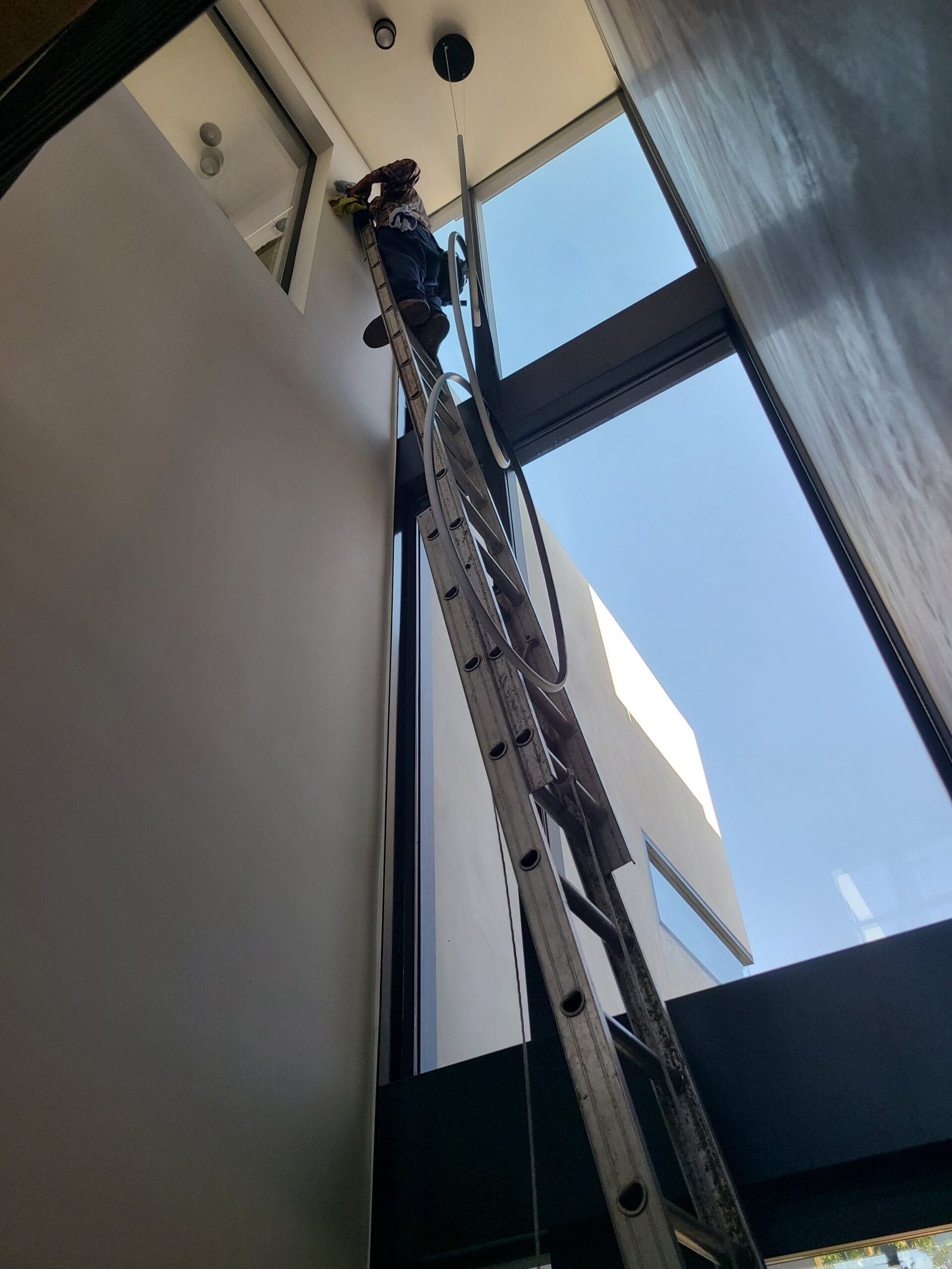
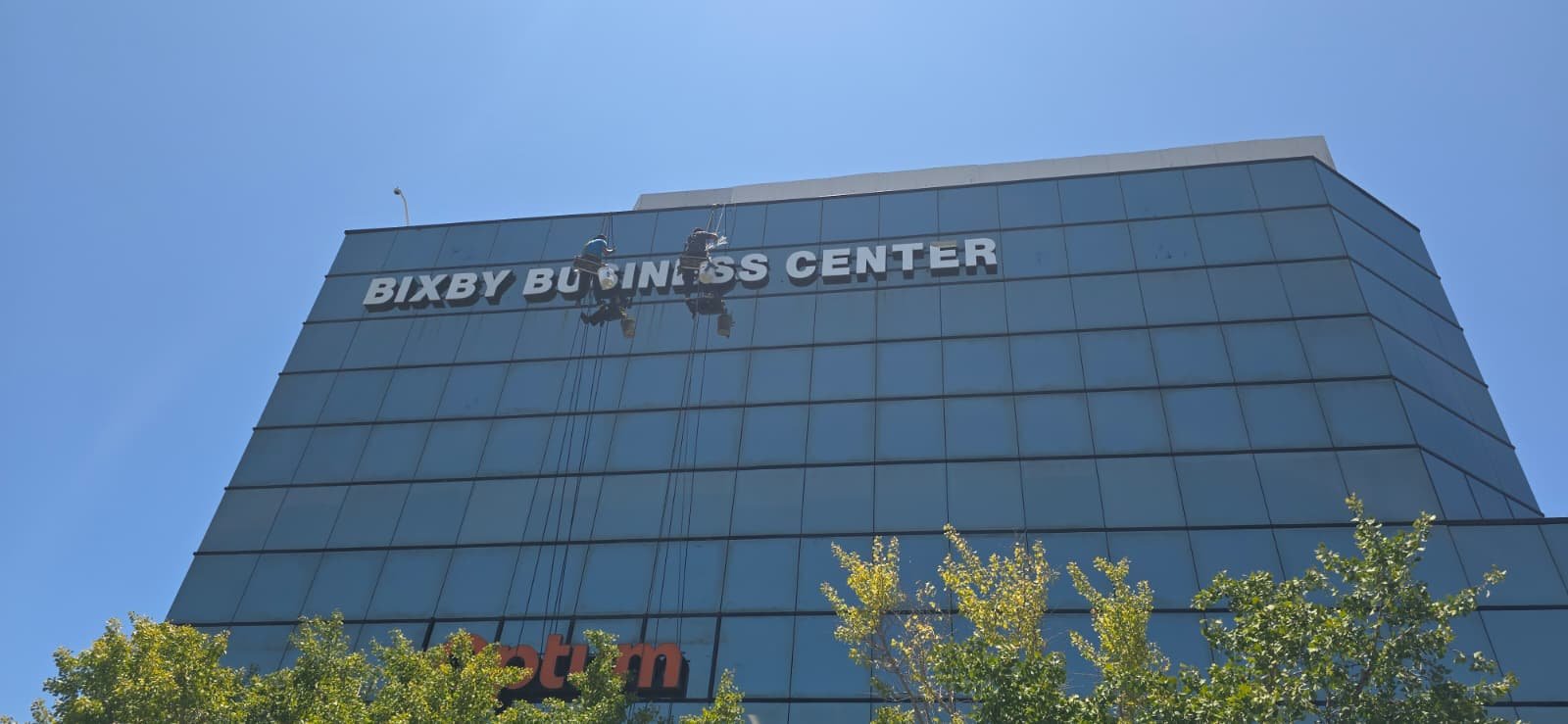
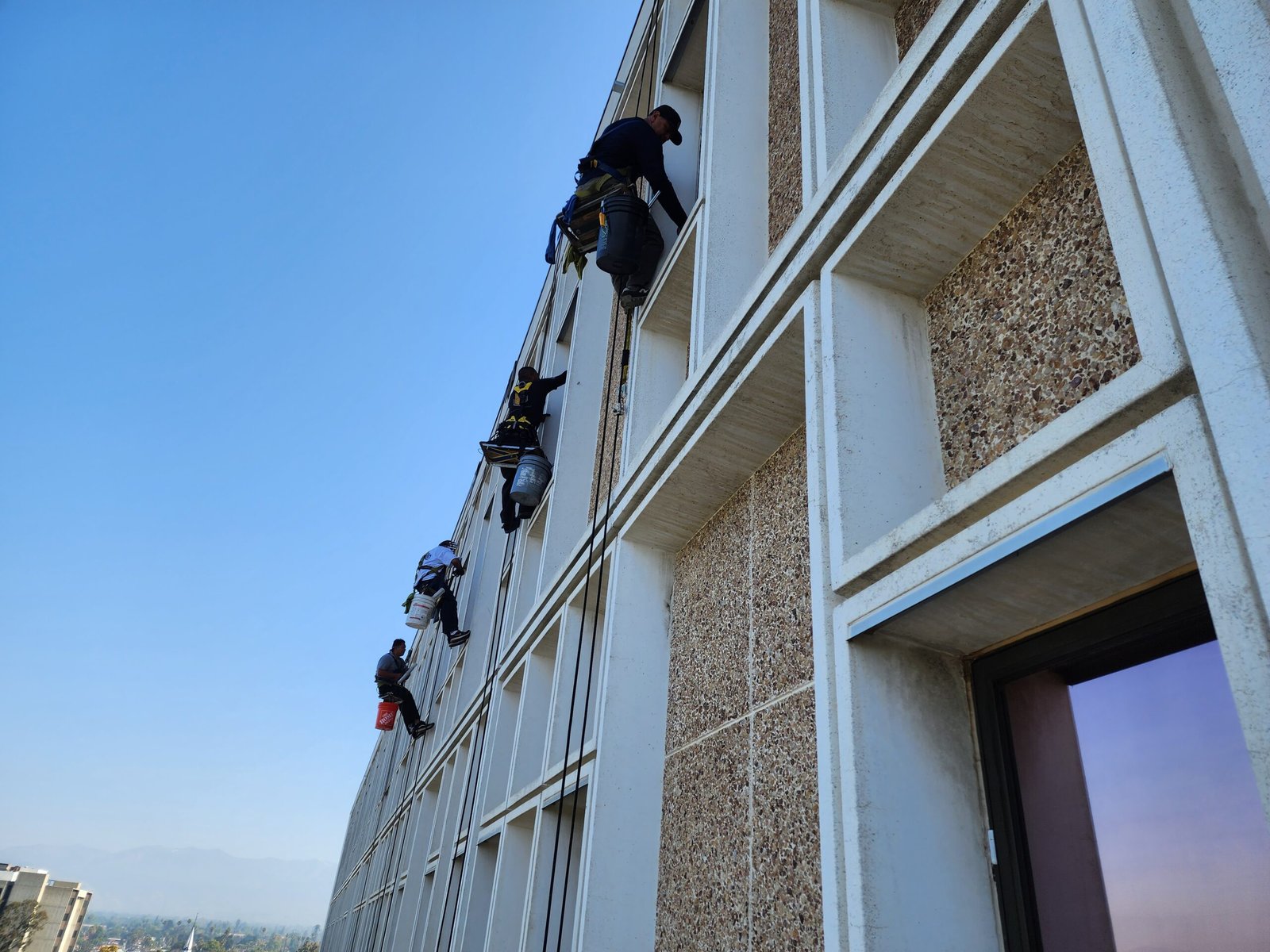
Ground-level observation identifies issues visible from street level — but the majority of facade defects requiring action are not visible from the ground. They are visible only from the facade elevation itself: the caulk joint that has cracked along its top edge, the failed window seal showing as interior fogging only observable at face level, the anchor bolt corrosion behind a cladding panel edge. A professional commercial building inspection for a multi-story building in Downtown Los Angeles, Signal Hill, or Long Beach requires certified rope access or drone-assisted aerial survey to reach and observe upper-floor elevations that cannot be inspected from the ground. An inspection limited to ground-level observation of a multi-story building is incomplete by definition. Read about our drone-assisted facade inspection process to understand how aerial surveys complement rope access inspection for complete elevation coverage.
Roof & Parapet Inspection
The roof surface, parapet coping, counterflashing, and all roof-to-wall transition elements require a separate roof-level inspection that addresses the most common water entry zone on commercial buildings — the interface between the roof membrane and the exterior wall system. This phase also includes inspection of all roof-mounted mechanical equipment flashings, any rooftop signage mounts, drainage outlets, and roof access infrastructure including rope access anchor points and davit sockets.
Interior Observation for Evidence of Prior Intrusion
A complete commercial building visual inspection includes a review of interior perimeter areas — the interior face of exterior walls, window sills and reveals, and any ceiling areas adjacent to exterior walls — for evidence of past or active water intrusion: water staining, efflorescence on masonry, mold, or damaged finishes that indicate the building envelope has already been breached. Interior evidence of intrusion narrows the search for the exterior entry point and provides the property manager with documented evidence of the condition’s history.
Photo-Documented Finding Record & Written Report
Every finding identified during the inspection is photographed — with context shots showing location and close-up shots showing condition detail — and entered into the written inspection report with a location description, condition classification, severity rating, and recommended action. The final report is a building condition document that the property manager can share with maintenance contractors for repair pricing, submit to insurance documentation requirements, include in due diligence packages for property transactions, and reference at the next inspection cycle to track condition changes over time.
Related reading: Rope access is the method that allows certified inspectors to reach every elevation of a Los Angeles high-rise and observe caulk, glass, and cladding conditions at face level — not from below. Read the complete benefits of rope access for high-rise building maintenance to understand why certified rope access inspection is the professional standard for multi-story commercial buildings.
04 How Inspection Findings Are Classified — The Severity Framework
A professional commercial building inspection report does not simply list everything that was observed — it classifies findings by severity and urgency so that property managers can prioritize repairs in a sequence that addresses the highest-risk items first while planning lower-priority work into the normal maintenance budget cycle. Here is the professional severity framework that Skyworks Unlimited uses for every commercial building inspection report.
05 What a Professional Inspection Report Delivers — and What It Should Always Include
The inspection report is the primary deliverable of a commercial building visual inspection — and the quality of that document determines how useful the inspection actually is to the property manager, asset team, or building owner who commissioned it. Here is what a professional inspection report for a Los Angeles commercial building should always contain.
06 The Inspection Checklist — What a Complete Assessment Covers
Use this checklist to evaluate whether a commercial building inspection proposal or completed inspection report you have received is genuinely comprehensive — or whether it has left systems unexamined that a complete assessment should address.
✅ Commercial Building Visual Inspection Completeness Checklist
07 Visual Inspection vs. Full Structural Engineering Assessment — Understanding the Difference
Property managers sometimes ask whether a visual inspection replaces a structural engineering assessment — or conversely, whether a structural engineering report makes a visual inspection unnecessary. The two are complementary, not interchangeable, and understanding the boundary between them is important for budgeting maintenance programs and managing building risk correctly.
| Dimension | Professional Visual Inspection | Structural Engineering Assessment |
|---|---|---|
| Who conducts it | Certified building maintenance technician, rope access inspector, or trained facade specialist | Licensed structural or civil engineer — PE credential required |
| What it covers | Visual condition of all accessible exterior surfaces — glass, caulk, cladding, drainage, coatings, anchors | Structural member capacity, load calculations, code compliance, material testing |
| Frequency | Annual — or at every cleaning visit (abbreviated check) | Triggered by identified concern, purchase, permit, or regulatory requirement |
| Destructive testing | No — visual observation only | May include core sampling, material testing, NDT methods |
| Output | Photo-documented condition report with severity classification and maintenance recommendations | Engineering report with analysis, conclusions, and professional opinion on structural adequacy |
| Relative cost | Fraction of engineering assessment cost — appropriate for regular annual program | Significantly higher — appropriate when visual inspection identifies structural concerns requiring engineering diagnosis |
| Relationship between the two | Visual inspection identifies what an engineer should look at — it is the referral mechanism to engineering review | Engineering assessment responds to concerns identified by visual inspection or triggered by other requirements |
08 How Visual Inspection Integrates with Commercial Building Maintenance Programs
The most efficient way to conduct commercial building visual inspections in Los Angeles and Southern California is not as a standalone engagement separate from maintenance visits — it is integrated into the cleaning and maintenance program so that every technician visit to the building produces both a maintenance output and an inspection record. Here is how Skyworks Unlimited integrates inspection into every project.
Inspection During Every Cleaning Visit — Abbreviated Check
Every Skyworks Unlimited window cleaning project — whether a quarterly high-rise clean in Downtown Los Angeles, a bi-monthly residential clean in Long Beach, or a single-mobilization facade service in Signal Hill — includes an abbreviated condition check at every elevation the technician works. Caulk condition, glass status, drainage observations, and any notable facade conditions are noted and reported to the property manager at project close as part of the standard written condition report. This ensures that between formal annual inspections, the building’s condition is being observed by trained eyes at every maintenance visit.
Annual Full Inspection — Comprehensive Report
Once per year, the abbreviated cleaning-visit check is replaced by a full, systematic inspection covering all twelve envelope systems described in Section 02 — conducted at a dedicated inspection mobilization or at a cleaning visit extended to allow complete assessment time. The annual full inspection produces the comprehensive, elevation-organized, photo-documented report with severity classification that constitutes the building’s annual condition record. For commercial properties in Beverly Hills, Santa Monica, and Pasadena with institutional ownership or third-party asset management, this annual report is a standard deliverable to the asset management team.
Finding-Triggered Follow-Up Services
Inspection findings directly drive maintenance service scheduling — a Severity 3 caulk finding from an inspection visit triggers a commercial caulking service booking within the required timeframe; a drainage finding triggers a gutter or scupper cleaning; a coating finding triggers a painting or coating maintenance consultation. Because Skyworks Unlimited’s inspection and maintenance services are delivered by the same certified team, findings from an inspection report translate directly into scheduled services without requiring the property manager to source a separate contractor for each repair type.
Drone Survey Paired with Rope Access Inspection
For complex building geometries — stepped facades, recessed sections, overhangs, and architectural features that are difficult to observe even from a rope — drone-assisted aerial photography is integrated with rope access inspection to achieve complete coverage. Drone photography documents elevations and conditions at scales and angles that close-range rope access inspection complements but cannot always fully capture. The two methods together produce a complete, evidence-rich inspection record. Read our guide on how drone technology improves exterior building cleaning and inspection for the complete methodology.
09 Skyworks Unlimited Commercial Building Inspection Standards
Every standard described in this guide is exactly how Skyworks Unlimited conducts commercial building visual inspections across Los Angeles, Long Beach, Beverly Hills, Santa Monica, and throughout Southern California.
SPRAT & IRATA Certified Inspectors for Multi-Story Buildings
Every Skyworks Unlimited rope access inspection is conducted by SPRAT or IRATA-certified technicians — the same certification standard that governs our cleaning and maintenance work. Individual certificates are available before any project mobilizes. A Level 3 Supervisor is present for the full duration of every elevated inspection project, ensuring that the inspection access is conducted to the same safety standard as our maintenance work. Read our complete guide on why SPRAT & IRATA certification matters for the full credential framework.
$1M+ General Liability — Property as Additional Insured
Every Skyworks Unlimited inspection project is covered by $1 million or more in commercial general liability with the property named as additional insured — standard on every engagement. Workers’ compensation explicitly covers rope access and at-height inspection operations. Documentation is provided before project start across all markets we serve, from Torrance to West Hollywood to Culver City.
Photo-Documented Report at Every Inspection Close
Every Skyworks Unlimited commercial building inspection delivers a written, photo-documented report organized by elevation, with every finding photographed, classified by severity, and accompanied by a specific recommended action. No verbal-only summaries. No inspection visit without a written report. The report is delivered digitally at project close and is available in both a full detail version for maintenance contractors and an executive summary version for asset managers and property ownership groups.
Finding-to-Service Continuity
Skyworks Unlimited’s position as both an inspection service and a building maintenance contractor means that inspection findings translate directly to service scheduling — not to a secondary referral process requiring a new contractor relationship. Caulking findings lead directly to commercial caulking service proposals; coating findings to painting consultation; drainage findings to gutter and scupper cleaning scheduling. Property managers across Lakewood, Seal Beach, Bixby Knolls, and Los Alamitos receive both the diagnostic clarity of a professional inspection and the service continuity that converts findings to completed repairs without interruption.
Know what to ask before hiring any building maintenance contractor: The questions that apply to window cleaning contractors apply equally to inspection service providers. Read our complete checklist in Questions to Ask Before Hiring a Window Cleaning Service in Los Angeles — every certification, insurance, and documentation question listed applies directly to any at-height building inspection contractor you evaluate.
Commercial Building Visual Inspection Across Los Angeles & Southern California
Skyworks Unlimited provides professional commercial building visual facade inspection services for office towers, retail buildings, mixed-use developments, and residential high-rises throughout Los Angeles and Southern California.
Frequently Asked Questions
Common questions from Los Angeles and Southern California property managers and building owners about commercial building visual inspections.
What is included in a commercial building visual inspection? ▾
How often should a commercial building in Los Angeles have a visual facade inspection? ▾
What is the difference between a visual inspection and a full structural engineering assessment? ▾
Does Skyworks Unlimited provide commercial building visual inspections in Los Angeles? ▾
Can a visual inspection identify caulking failure before water intrusion occurs? ▾
What access method is used for upper-floor facade inspection on high-rise buildings?
More from the Skyworks Unlimited Blog
Ready to Schedule a Commercial Building Visual Inspection?
Skyworks Unlimited provides certified rope access commercial building visual inspections across Los Angeles, Long Beach, Beverly Hills, Santa Monica, Signal Hill, Pasadena, and throughout Southern California — fully insured, photo-documented severity-classified report at project close.
Request a Free Quote Or speak directly with our team: (562) 291-7549Tags & Keywords:
#CommercialBuildingInspection #FacadeInspectionLA #BuildingVisualInspection #SkyworksUnlimited #LosAngelesBuildingInspection #FacadeConditionReport #BuildingEnvelopeInspection #RopeAccessInspection #CommercialPropertyInspection #LongBeachBuildingInspection #BeverlyHillsFacadeInspection #BuildingMaintenanceLA #CaulkingInspection #ExteriorBuildingInspection #HighRiseFacadeInspection